Navaratri and women have always been close in my mind, but this year I want to put that thought into words. Our books and instruments are placed for pooja, and a lamp has been burning day and night since the pooja began. Tomorrow morning, on Vijayadashami, we will take everything back. As I sat near that lamp, one thought stayed with me: the Goddess we honour for nine nights stands for the very strengths every woman needs.
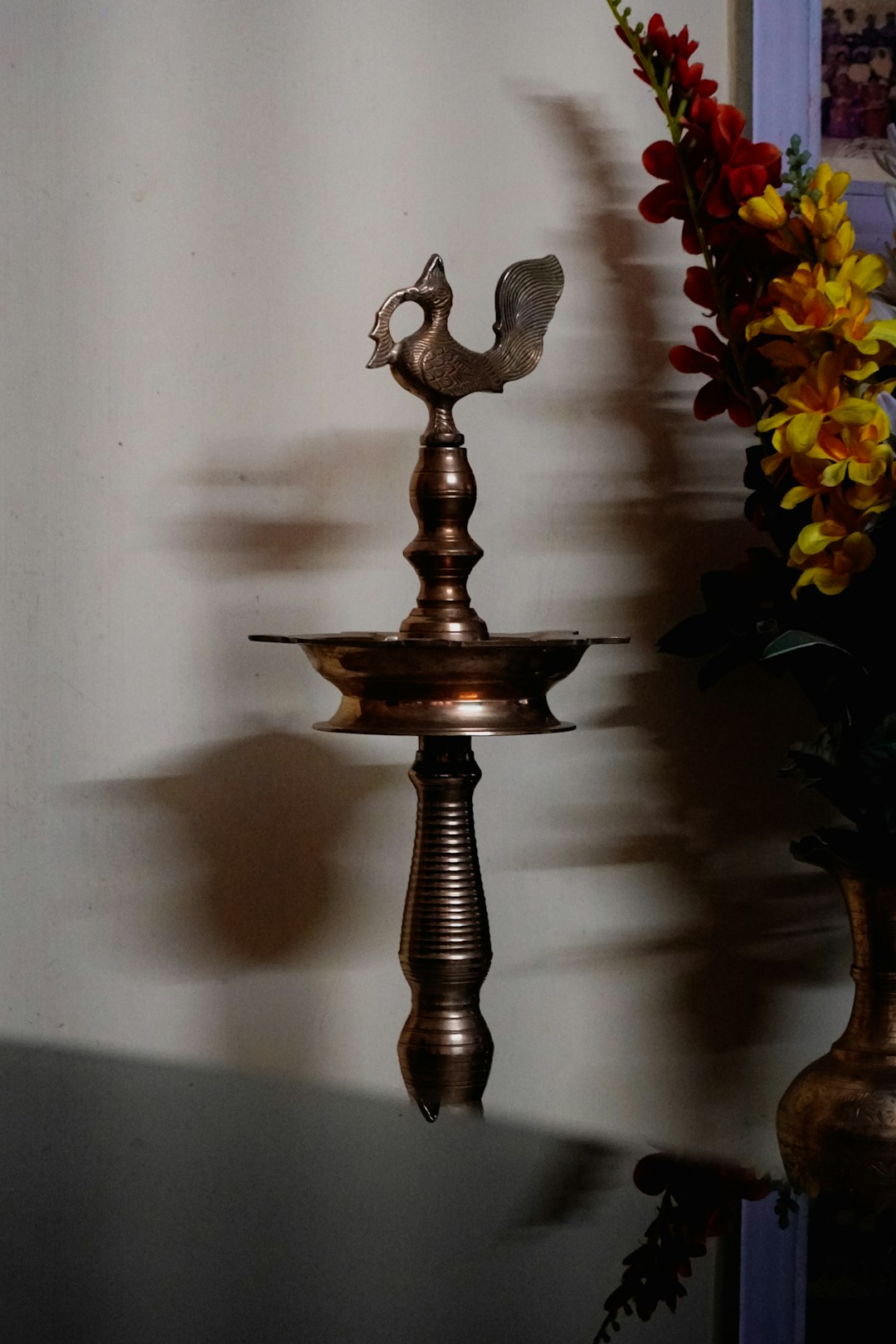
Table of Contents
Our Navaratri Pooja at Home
In Kerala, we traditionally do not keep a Golu, a display of dolls arranged on steps. Our Navaratri is quieter and simpler. We place our books, pens and instruments before the Goddess, light a lamp and keep it burning until the morning of Vijayadashami, when the pooja is removed and we take our books back.
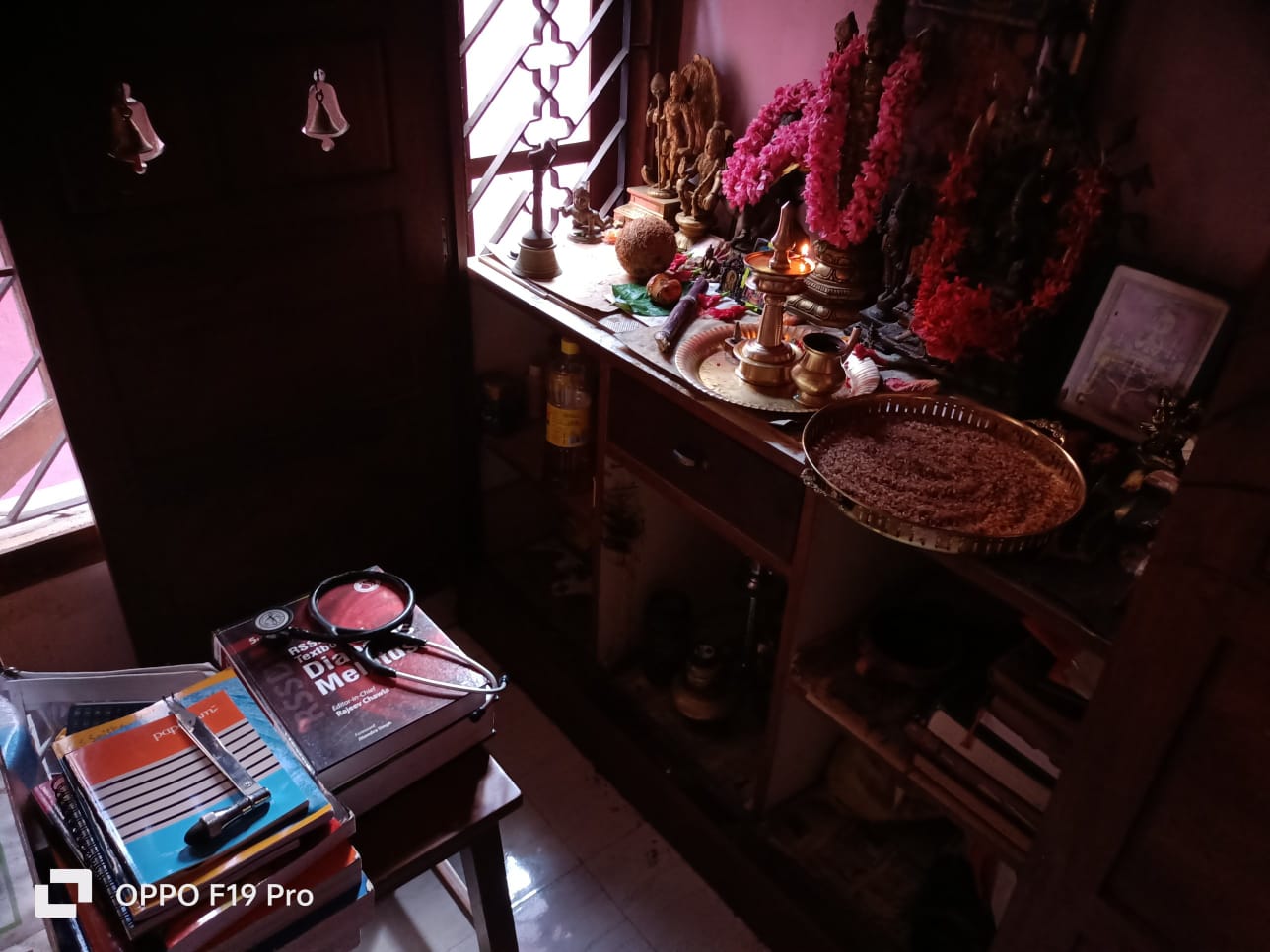
The last three days of Navaratri are dedicated to Saraswathi, the goddess of learning. That is when students place their books and study materials for worship, as the Government of India’s Utsav portal explains. Vijayadashami is also the day of Vidyarambham in Kerala, when children write their first letters in rice.
It is not only books that go for pooja. Pens, pencils, pencil pouches and whatever tools or devices we use all get a rest in front of the Goddess. That means a break for everyone, and children are not supposed to read, write or study for those two or three days. Believe me, they look forward to it all year! Many families also travel to distant temples where Saraswathi is the main deity, such as the Kollur Mookambika Devi Temple, to seek her blessings for learning.
I love this part of the festival. For a few days, we deliberately put our books, our instruments and our work in front of us and say that they matter. It is a rare reminder that learning and skill deserve a place of honour, especially for women who so often put themselves last.
Navaratri and Women: Three Goddesses, Three Powers
Many families see the nine nights as three sets of three: Durga for strength, Lakshmi for prosperity and Saraswathi for knowledge. Whatever our own tradition, I find the idea beautiful. Navaratri and women are linked in my mind because these three powers are exactly what a woman needs to stand on her own feet: the courage to step out, an income of her own and the freedom to keep learning.
There is something else I find deeply meaningful. For nine nights, power itself is worshipped as a woman. Few festivals place the feminine so firmly at the centre. If we bow before the Goddess in the pooja room, the same respect must reach the women in our homes, our workplaces and our streets. A festival that honours Shakti cannot ignore the daughters, mothers and grandmothers who hold up our families every single day.
The best part is that all three powers can be built slowly, in small steps, at any age. Let me share how I see each one.
Strength: The Courage to Step Out
Durga is never a quiet figure. She rides out and faces what others fear. Most of us will never fight demons, but many women need courage of another kind: to speak up, to try something new, to say yes to a role we feel unready for. This is where Navaratri and women’s courage meet.
As Club Secretary at Trivandrum Toastmasters, I reach out to members and give them a gentle nudge to take up a weekly meeting role. Many hesitate at first, and then surprise themselves. In my 50s, I am still learning to step up in the same way. I also think of women who carry hard years quietly, as I wrote in Women Who Suffer in Silence. Real strength includes asking for support and offering it to another woman.
Prosperity: An Income of Your Own
Lakshmi is often reduced to money, but to me she stands for security and choice. So many women run a home with endless unseen work and no income of their own. I wrote about this in The Work We Do That Nobody Sees. Even a small income can bring a woman respect, a voice in decisions and peace of mind. That is what Navaratri and women’s financial independence have in common.
Today, a skill you already have can earn from home. I am working towards this myself, and I will share the journey here as it grows. The first step is simply believing that your skills have value.
Knowledge: Begin Again at Any Age
Saraswathi, the goddess of knowledge and the arts, is honoured on the last days of Navaratri, and tomorrow is considered the best time to begin learning something new. Little children across Kerala will be initiated into education on Vidyarambham, but the day is not only for letters. Families also begin dance, music, painting, an instrument or absolutely anything else on this day. And learning does not belong to children alone. After a long break, I returned to studies and am now doing my PhD in my 50s, as I shared in What They Don’t See When They Say “Wow, You’re Doing a PhD”. It was not easy, and there were moments of doubt.
What kept me going is a simple belief: there is no right age to begin again and no quieter season to wait for, as I wrote in Stop Postponing. That is the message of Navaratri and women who begin again. If a book, a course or a dream has been waiting on a shelf, Vijayadashami is a good day to open it.
Nine Colours, Nine Reminders for Women
Many people also follow a custom of wearing a different colour on each of the nine days. It is especially popular in western India, and the order changes every year with the weekday on which Navaratri begins. Here are this year’s nine colours, with the form of Durga worshipped each day. I like to read them as nine small reminders for women:
- Orange (Shailputri): warmth and positive energy. Begin, even when you feel unready.
- White (Brahmacharini): purity and peace. Protect your inner calm.
- Red (Chandraghanta): love and strength. Let your courage show.
- Royal blue (Kushmanda): tranquillity and abundance. Trust that there is enough for you too.
- Yellow (Skandamata): cheerfulness and optimism. Mothers need joy of their own.
- Green (Katyayani): growth and renewal. It is never too late to grow.
- Grey (Kalaratri): balance and composure. Stay steady when life turns dark.
- Purple (Mahagauri): grandeur and nobility. Know your worth.
- Peacock green (Siddhidatri): individuality and compassion. Be yourself, and be kind.
Colours or no colours, the message is the same. Every woman carries all nine in her: warmth, calm, courage, abundance, joy, growth, balance, dignity and compassion. The Goddess is worshipped for nine nights because she holds all of them, and so does every woman we know.
A Small Vijayadashami Resolution
You do not need a grand plan. Pick one small step for each power:
- Strength: Say yes to one thing that makes you nervous, or speak up in one place where you have stayed silent.
- Prosperity: Write down one skill you could earn from, and one person you will talk to about it this week.
- Knowledge: Open the book, course or idea you have been postponing, and give it just 15 minutes today.
As the lamp burns through the night, I am reminded that a small flame is enough to light a whole room. Navaratri and women share this quiet strength, which shines when we give it a place.
Wishing you a blessed Vijayadashami and a joyful Vidyarambham. Which of the three powers do you most want to build this year? Tell me in the comments.