“Tr, which is the highest-paying job these days?” Students ask me this when we meet, and the question tells me a lot about how today’s children think. It also shapes how many families approach stream selection after Class 10.
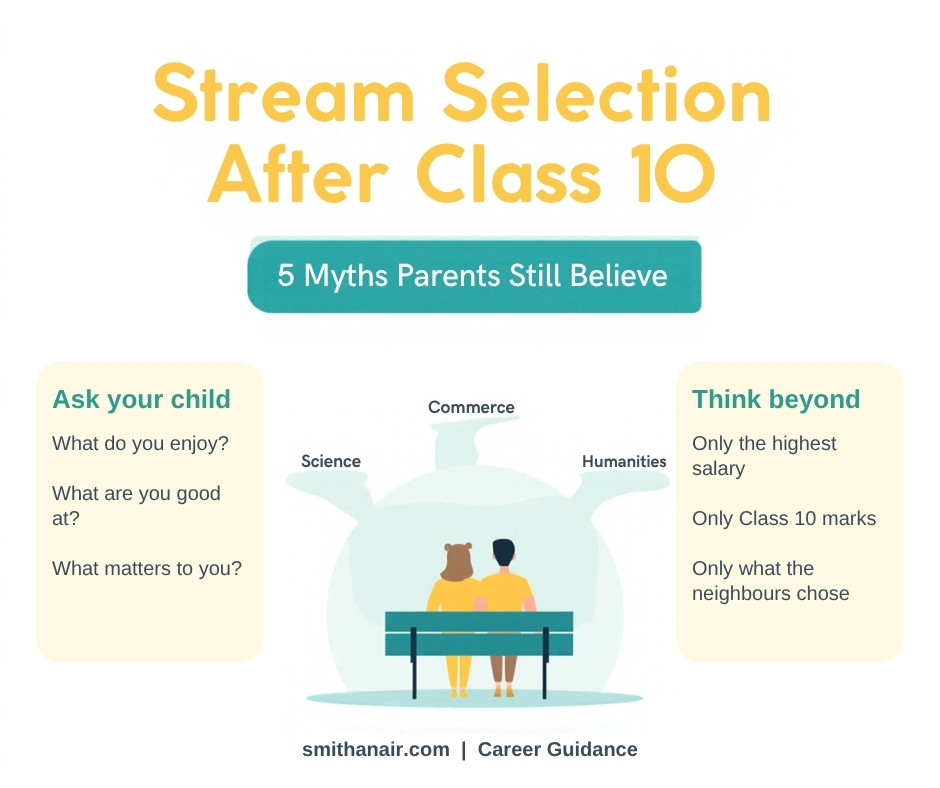
Table of Contents
The Question Students Ask Me Now
Where we live, a good career once meant only two things: becoming a doctor or an engineer. Later, the Civil Services joined the list, and IAS, IPS and IFS became the new dream. Today’s children think differently. They do not ask which job is respected or which one they would enjoy. They ask which job pays the most.
I do not blame them. Several things shape that thinking:
- Social media shows them influencers, celebrities and sportspersons living glamorous lives, and they connect success with earnings.
- Headlines about huge placement packages make a high salary look like the only measure of a good career.
- Education is costly, so many families feel pressure to choose whatever promises quick returns.
- News about AI and a fast-changing job market makes students want something “safe” and well-paid.
These worries are real. But they lead to one of the most common myths in stream selection.
Myth 1: The Highest-Paying Job Is the Right Stream
Money matters, and wanting financial security is not wrong. The mistake is making pay the only question. The highest-paying job today may not be the highest-paying job when a Class 10 student finishes college, nearly a decade later. Pay changes with demand, and demand changes faster than a child can finish a degree.
Pay also says nothing about fit. A student who dislikes a subject may struggle through years of study and end up unhappy in a well-paid job. Someone who enjoys their field usually grows faster and lasts longer.
Instead of asking “Which job pays the most?”, try asking three questions with your child:
- Which subjects do you enjoy enough to keep learning, even when they get hard?
- What kind of problems do you like solving?
- What would a good working day look like for you?
Four More Stream Selection Myths
Parents have worried about stream selection for generations, and these four myths come up again and again.
Myth 2: Science is the only good stream
Science suits students who love it. For others, commerce and humanities open doors to strong careers in finance, law, teaching, media, design, public service and more. A stream is a starting road, not a ranking of intelligence.
Myth 3: Class 10 marks decide the future
Marks matter for admissions, but they should not be the only factor in stream selection. They measure one exam on one day. They do not measure creativity, communication, leadership or the ability to keep learning.
Myth 4: Children are too young to know what they want
They may not know everything, but they know what interests them. A parent who listens closely often learns more than one who decides alone. Your child’s voice should be part of every stream selection conversation.
Myth 5: Once a stream is chosen, there is no turning back
Many paths overlap, and students often find routes to a career through more than one stream. Rules differ by board and state, so check the latest ones on your board’s website, such as CBSE, before deciding. But do not let the fear of a wrong choice freeze the decision.
What to Do Instead
Good stream selection starts with a conversation, not a salary chart. Sit with your child and look at their interests, strengths and values together. Read about courses and careers beyond the famous few. If you feel unsure, speak to a career counsellor or a teacher who knows your child well.
As a researcher in career guidance, I believe a child who chooses with understanding is likelier to stay motivated than one who chooses under pressure. For another career story, read my post on career lessons from Nana Patekar.
Which of these myths have you heard at home or in school? Tell me in the comments, and let me know what part of stream selection you would like me to cover next.